
HDPE Geomembrane Thickness Guide
Thickness is the biggest single line in a liner budget and the most common thing to get wrong in both directions. This is how to choose it on evidence rather than on price.
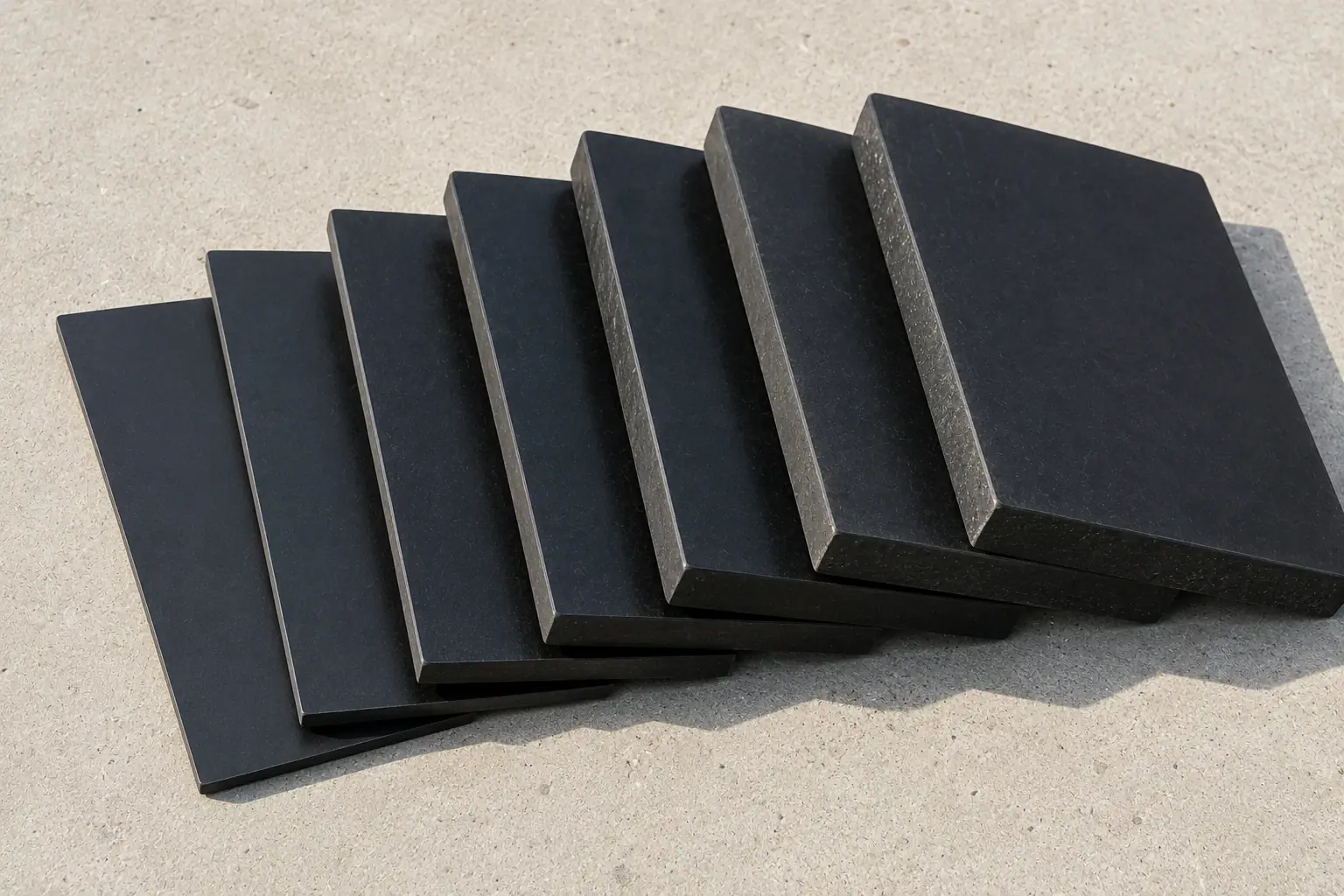
What thickness actually buys you
A common misconception is that thicker liner is needed to hold more water pressure. It is not — the sheet is supported by the ground beneath it, so hydrostatic pressure is largely irrelevant to thickness selection.
What thickness actually buys is:
- Puncture and tear resistance during installation, covering and service. Most damage happens while people and plant are on the liner.
- Tolerance of an imperfect subgrade. Thicker sheet bridges small irregularities that would puncture thin sheet.
- Service life when exposed. More material means more carbon black and antioxidant in absolute terms and a longer path for degradation to work through.
- Weldability and repairability. Thicker sheet takes more heat but gives a more robust extrusion weld at details and patches.
Grade by grade
0.50 mm
Temporary works: construction water storage, dewatering ponds, evaporation trials, anything with a design life measured in months. Cheap and light to handle. Unforgiving of a rough subgrade and of foot traffic. Rarely the right choice for anything permanent.
0.75 mm
The volume grade for UAE agriculture. Farm and irrigation reservoirs, decorative ponds, small aquaculture. Good value where the pond stays largely full, the subgrade is clean prepared sand and nobody walks on the liner regularly. Pair it with a geotextile cushion if the ground is stony.
1.00 mm
The sensible upgrade for anything with a long exposed life: municipal and TSE reservoirs, larger fish ponds, farm storage that is drained and refilled frequently. The extra 25 % of material buys a disproportionate increase in installation robustness. If you are hesitating between 0.75 and 1.00 mm, the deciding questions are how exposed the liner is and how often the pond will be empty.
1.50 mm
The usual minimum where a consultant or regulator signs the structure off: landfill base and capping, leachate ponds, industrial effluent lagoons, secondary containment. It also becomes sensible for water storage where the base will be trafficked or covered with soil.
2.00 mm
Heavy-duty containment: mining and brine ponds, cells receiving bulk waste, liner under significant load, steep slopes with cover material. Usually textured on both faces on slopes steeper than 1V:3H.
2.50 – 3.00 mm
Severe chemical exposure, heavy plant trafficking directly over the liner, or very long design lives. Plan the offloading early — rolls at these thicknesses are heavy and need proper handling equipment.
What under-specifying looks like
It rarely fails on day one. The pattern is:
- Sheet is punctured during installation or covering — often by the crew, not by the ground.
- Small defects go undetected because testing was limited or absent.
- Seepage begins slowly and is mistaken for evaporation.
- By the time it is obvious, the pond has to be drained to find the leak.
The cost of draining, locating, repairing and refilling a reservoir usually exceeds the entire saving from going one grade thinner — on the first occurrence.
When thicker is wasted money
It is genuinely possible to over-specify. A covered pond on clean screened sand with a short design life does not need 2 mm sheet. Nor does a small nursery tank. Thickness that is never called upon is simply material you paid for and buried.
The trade is: thin sheet plus a good geotextile cushion is often better value than thicker sheet on a bare subgrade. If your ground is the risk, protect against the ground.
A working rule
Start from what a leak would cost you. If a leak means lost irrigation water on your own land, 0.75–1.0 mm is proportionate. If it means a consultant's sign-off, a regulator, or contaminated liquid reaching ground, start at 1.5 mm and design the system, not just the sheet.
Whichever grade you land on, confirm it against the property values on the specifications page and price it on the price guide. If you would rather have the recommendation made for you, describe the structure to a team supplying HDPE geomembrane across the UAE and it will come back with the reasoning attached, so you can challenge it.
Talk it through with someone who quotes this daily
Send your area, thickness and application. You get a written quotation with a roll schedule and material data sheet.
Answers for specifiers & buyers
Frequently asked questions
What thickness of geomembrane do I need for a farm reservoir?
0.75 mm for a reservoir kept largely full on clean prepared sand; 1.00 mm where the liner stays exposed for years, the pond is drained and refilled often, or the subgrade is coarse. Add a geotextile cushion in either case if the ground is stony.
Is 1.5 mm geomembrane always required for landfill?
It is the common minimum in most specifications for base lining and capping, with 2.0 mm used where loads or slopes are more severe. Always work to the project specification rather than to a general rule — and if the specification is silent, ask the designer rather than guessing.
Does thicker geomembrane resist more water pressure?
Not meaningfully. The sheet is supported by the ground, so hydrostatic pressure is not the governing factor. Thickness buys puncture and tear resistance, tolerance of subgrade imperfection and exposed service life.
Can I use geotextile instead of thicker liner?
Often, yes — and it can be better value. A non-woven cushion protects against subgrade puncture, which is the main risk thicker sheet is bought to address. It does not extend UV service life, so for exposed liner thickness still matters.
Read next
- Property values by thicknessGRI-GM13 figures for each grade
- What each grade costsSupply and installed rates
- System designWhen the answer is a system rather than a thicker sheet
Need a price on HDPE geomembrane this week?
Send the area, thickness and emirate. You get a written quotation with material data sheets attached — usually the same working day.